
What is the Schengen Area?
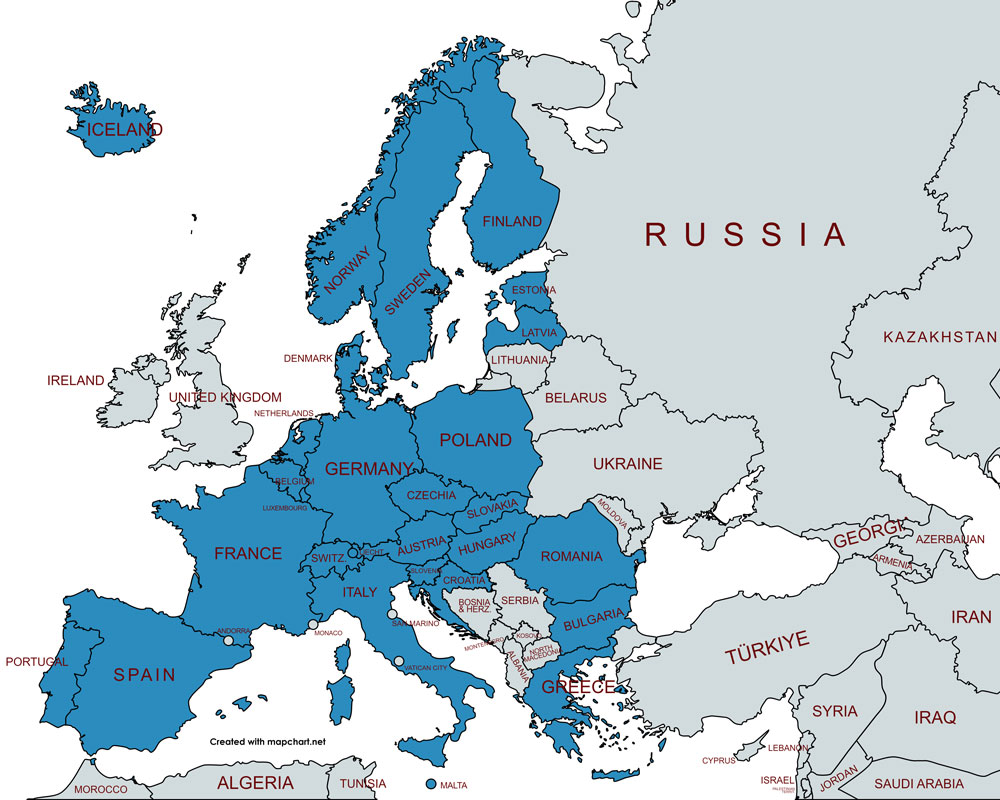
The Schengen Area is a group of 29 European countries that have removed routine passport controls at their shared borders. For travellers, this means that flying between Schengen countries is often similar to taking a domestic flight, with fewer border checks.
The Schengen Area includes most European Union countries, as well as Iceland, Liechtenstein, Norway, and Switzerland. Not all EU countries participate in Schengen.
Schengen Area Countries
Austria, Belgium, Bulgaria, Croatia, Czechia, Denmark, Estonia, Finland, France, Germany, Greece, Hungary, Iceland, Italy, Latvia, Liechtenstein, Lithuania, Luxembourg, Malta, the Netherlands, Norway, Poland, Portugal, Romania, Slovakia, Slovenia, Spain, Sweden, and Switzerland.
Ireland and Cyprus are EU member states but are not currently part of the Schengen Area.
What does the Schengen Zone mean in the airport?
Many European airports divide their terminals into Schengen and non-Schengen areas.
- If you are flying between two Schengen countries, you will generally depart from and arrive in the Schengen area of the airport.
- If you are flying between a Schengen country and a non-Schengen country, you will use the non-Schengen area and may pass through passport control.
This distinction is important because lounges, restaurants, sleeping areas, and other airport facilities may be located in either the Schengen or non-Schengen part of the terminal.